
In this article, we’ll walk you through some simple steps for checking your moles with the ABCDE check of melanoma and how it can help you catch the warning signs early.
Learn the ABCDE rule
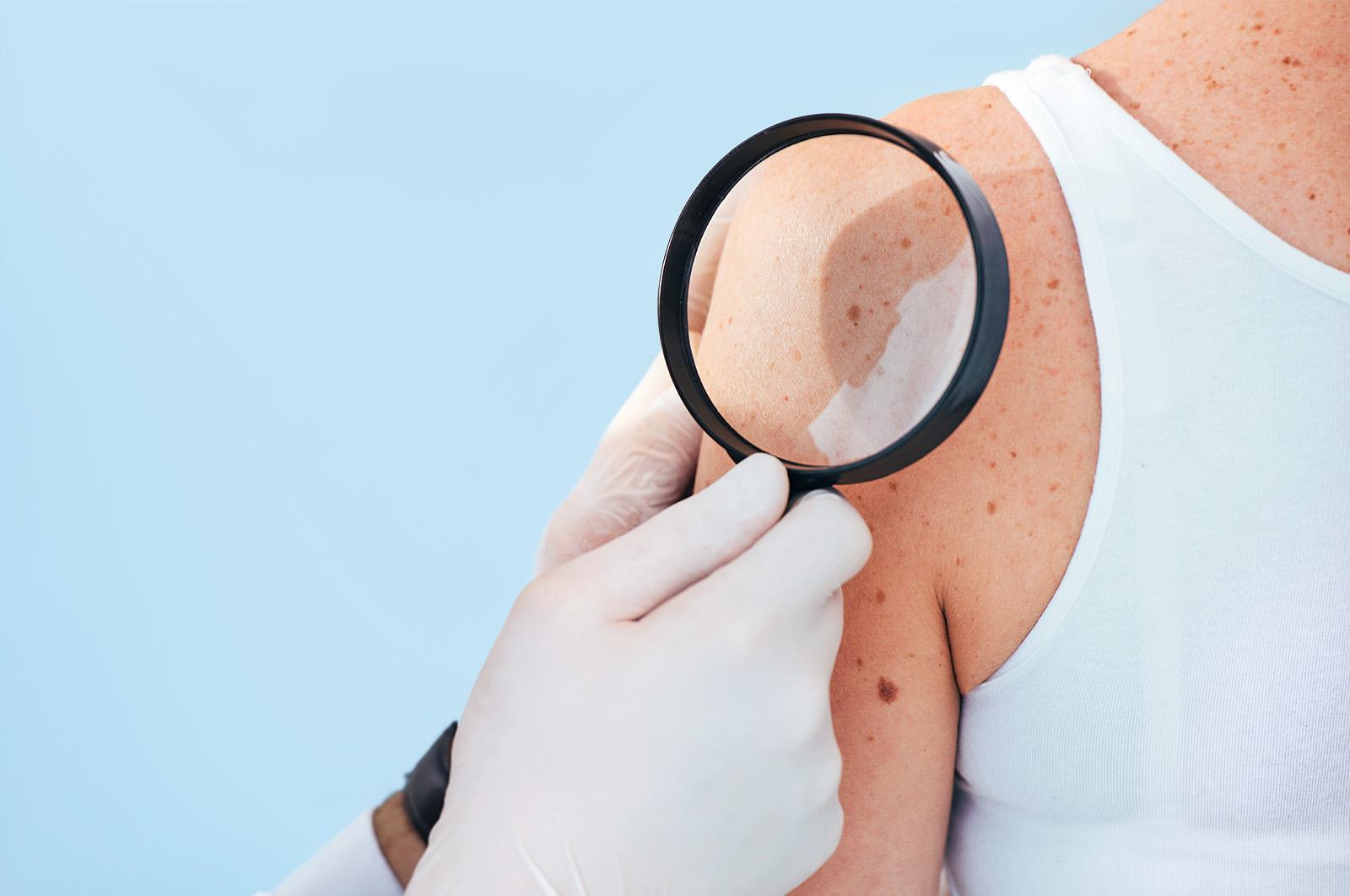
The ABCDE rule is a simple tool created by doctors to help people spot early signs of melanoma (a serious type of skin cancer). It helps you notice changes in your moles that may need medical attention. Since it can be hard to distinguish harmless moles from dangerous ones, monthly skin checks are key since most melanomas start as a new mole or skin growth.
If you notice any of below ABCDE signs, get your spot checked by the SkinVision app or contact your doctor directly.
Asymmetrical
Examples of melanomas with warning signs


Warning sign description
One half doesn’t match the other. The skin spot has irregular shape.
Border
Examples of melanomas with warning signs


Warning sign description
Irregular, jagged, or blurred edges.
Colors
Examples of melanomas with warning signs


Warning sign description
Multiple or uneven colours.
Diameter
Examples of melanomas with warning signs


Warning sign description
Larger than 6 mm (pencil eraser).
Evolution
Examples of melanomas with warning signs


Warning sign description
Any change in size, shape, colour or symptoms like bleeding or itching.
Nodular melanoma (NM) may lack these ABCDE diagnostic features. In this case, the EFG rule, standing for Elevated, Firm and Growing, is relevant for prompting the excision of a potentially aggressive melanoma.
Signs of other skin cancer types
To visually detect basal cellular carcinoma (BCC), typical signs are:
- A shiny, pearly bump (skin-colored, pink, or slightly pigmented) often with visible tiny blood vessels (telangiectasia).
- A spot that does not heal, bleeds easily and forms a crust.
- A slowly enlarging pink patch with a slightly raised, rolled border.
- A scar-like area (white, waxy, flat) without a clear cause.
- A pimple-like bump that never goes away.
In general, key points to keep in mind about BCC are: (i) it grows slowly; (ii) bleeds with minor trauma; (iii) looks translucent or shiny; (iv) often on sun-exposed areas (face, ears, scalp, neck).
For squamous cell carcinoma (SCC) typical signs are:
- A rough, scaly, red patch that persists.
- A hard, thick, keratinized lump (like a crusty bump).
- A sore or ulcer that doesn’t heal and may bleed.
- A wart-like growth that continues to enlarge.
- A tender or painful lesion (pain is more common than in BCC).
Key clues about SCC include: (i) faster growth compared to BCC; (ii) often feels firm; (iii) often develops in areas with long-term sun damage; (iv) may arise from actinic keratosis (precancerous rough spots).
The hidden spots you might be missing
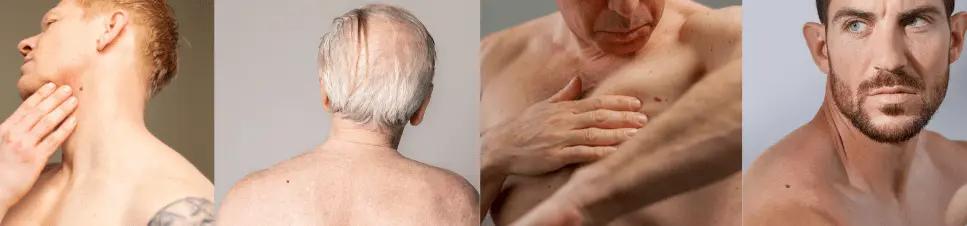
Moles can pop up anywhere—even in spots you rarely think to check. Melanomas can grow in unusual and hidden places, so it’s important to be aware of this. Check these often-overlooked areas using the ABCDE method:
Between your toes & feet
Skin cancers of the feet are often spotted too late due to difficulty in identifying the spot. Therefore, survival rates are lower here than for other body areas. A study by the Journal of Foot and Ankle Surgery found an overall 5-year survival rate of 52% for patients with primary melanoma of the foot and ankle as compared to 84% for patients with primary melanoma somewhere else on the lower part of the body.
Foot melanomas are often a form of cutaneous melanoma but they could also be other forms of the cancer, like acral lentiginous melanoma and nodular melanoma.
Under the nails or on soles
Acral lentiginous melanoma will often form under the nails or toenails as a narrow, dark streak. It can affect anyone but is seen more often in people with darker skin. These melanomas can also appear as dark patches on the palms or soles.
Eyes
Ocular melanoma is a very rare form of melanoma, but it can show up as a dark spot on the iris, a change in pupil shape, blurry vision, or flashing lights or floating specks.
Mouth, nose, or other mucous areas
Mucosal melanoma can appear as sores that won’t heal in your mouth or nasal passages, or in other areas of the body that produce mucus such as the vagina and anus. If you notice any sores in these areas that won’t heal and cannot be explained by other causes, see your doctor and have them checked out.