Skin cancer symptoms can include a new or changing mole, an unusual skin growth, a persistent scaly patch, or a sore that does not heal. Recognising these changes can help you identify when a skin spot needs medical attention.
You can check your skin at home by examining your body from head to toe and looking for new, changing, or unusual spots. The ABCDE method can help you recognise warning signs of melanoma, but other types of skin cancer may look different.
A skin self-examination cannot diagnose skin cancer. If you notice a suspicious spot or a change in your skin, arrange an assessment with a healthcare professional.
What are the common symptoms of skin cancer?
Skin cancer can look different from one person to another. Common warning signs include:
- A new mole, spot, lump, or growth on your skin.
- A mole or existing spot that changes in size, shape, colour, or texture.
- A sore that does not heal or repeatedly heals and reopens.
- A rough, scaly, or crusted patch that persists.
- A growth that bleeds, itches, becomes tender, or develops a sore surface.
- A spot that looks noticeably different from other marks on your skin.
These changes do not necessarily mean that you have skin cancer. Many skin conditions are harmless. However, new or changing lesions deserve attention, particularly if they continue to grow or develop other unusual features.
Skin cancer can develop on sun-exposed areas, such as the face, ears, neck, arms, and hands. It can also appear in less obvious places, including the scalp, palms, soles of the feet, and beneath the fingernails or toenails.
How do I check my skin for signs of skin cancer at home?

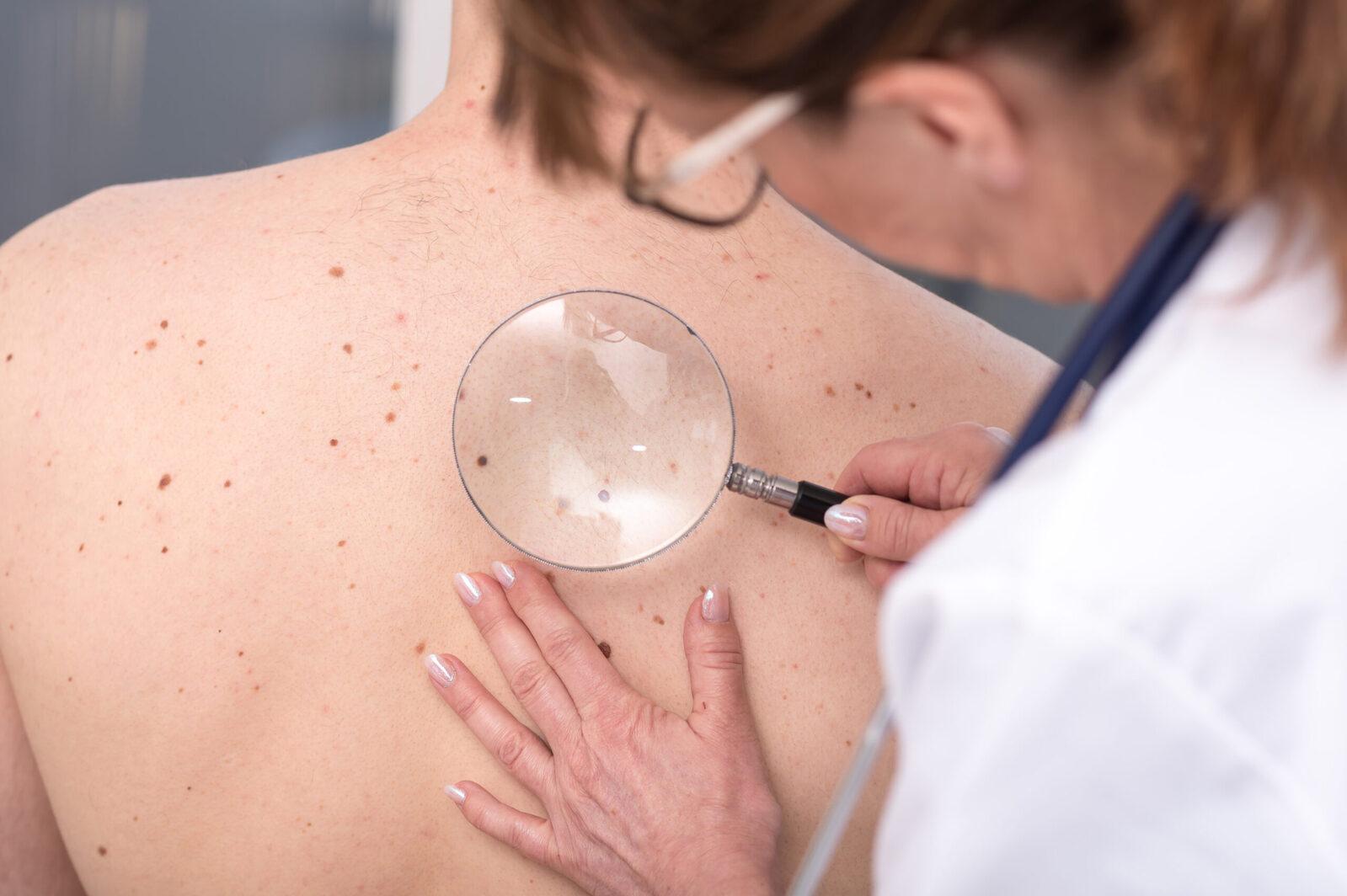
A skin self-examination helps you become familiar with your skin and notice changes that may need professional assessment. You do not need specialist equipment, although good lighting and mirrors can make the process easier.
1. Prepare for Your Skin Check
Find a well-lit, private space and gather:
- A full-length mirror.
- A handheld mirror.
- A phone or camera to document changes, if helpful.
Examine your skin when you can see its surface clearly. If you have difficulty checking certain areas, ask someone you trust to help.
2. Examine Your Skin From Head to Toe
Work through your body systematically so you do not overlook less visible areas.
- Face, ears, and neck: Check your nose, lips, ears, and the skin around them. Look behind your ears and examine the front and back of your neck.
- Scalp: Part your hair in sections to inspect your scalp. A handheld mirror or another person’s help can make this easier.
- Arms and hands: Examine your upper arms, elbows, forearms, underarms, wrists, palms, and the backs of your hands. Check between your fingers and around your fingernails. Don’t forget to remove nail polish before checking your nails.
- Chest and torso: Look at your chest, abdomen, and sides. Check beneath skin folds and the undersides of your breasts, where applicable.
- Back and buttocks: Use a handheld mirror to examine your shoulders, upper and lower back, and buttocks. Ask someone to help if you cannot see these areas clearly.
- Legs and feet: Check the front, sides, and backs of your legs, including your knees and ankles. Examine your feet, soles, spaces between your toes, and toenails.
- Genital area: Check the skin of your groin and genital area, using a handheld mirror if needed.
Pay attention to your entire skin surface, not only areas that receive frequent sunlight. Many experts recommend checking your skin about once a month.
3. Look for New or Changing Spots
As you examine your skin, pay attention to moles, freckles, patches, and growths that appear unusual.
Ask yourself:
- Is this spot new?
- Has an existing mole changed in size, shape, or colour?
- Does it look different from my other moles?
- Has its surface become rough, scaly, or crusted?
- Does it itch, hurt, or bleed?
- Is there a sore that has not healed?
You may find it helpful to take photographs of a spot and record the date so you can compare its appearance over time. Photographs can help document changes, but they cannot establish whether a spot is cancerous. SkinVision lets users store photos to track changes over time.
Do not delay seeking medical advice while monitoring a suspicious spot. If you notice a concerning change, arrange an assessment rather than waiting to see whether it gets worse.
What are the ABCDE signs of Melanoma?
The ABCDE method is a useful way to remember five features that may indicate melanoma, a type of skin cancer that develops from melanocytes, the pigment-producing cells in the skin.
A – Asymmetrical shape
One half of a mole or spot looks different from the other half.
B – Border
The edges are irregular, uneven, notched, or poorly defined.
C – Colour
The spot contains different colours or uneven shades. These may include brown, black, tan, red, pink, white, or blue.
D – Diameter
The spot is larger than approximately 6 millimetres, about the size of a pencil eraser. However, melanoma can be smaller than 6 millimetres, so size alone cannot determine whether a spot is concerning.
E – Evolving
The mole or spot changes over time, including changes in size, shape, colour, elevation, or other characteristics.
A spot does not need to display every ABCDE feature to warrant attention. Some melanomas, such as nodular melanoma, appear as a firm, raised bump that grows over weeks or months and may be a single colour or even pink or red. Any spot that is elevated, firm, and growing should be checked promptly.
For more details to the ABCDE Melanoma self check, see this article.
What does Melanoma look like?
Melanoma may appear as a new, unusual spot or as a change in an existing mole. Its appearance can vary, and not every melanoma is dark brown or black.
Possible warning signs include:
- A mole that changes in size, shape, or colour.
- A spot that looks different from the surrounding moles.
- A new or unusual pigmented mark.
- A spot that becomes itchy, tender, or painful.
- A lesion that bleeds, crusts, or develops an open sore.
Melanoma can also occur in areas that receive little sunlight, including the palms, soles, and beneath the nails. Its appearance can vary across skin tones, so checking only for dark spots is not sufficient.
If you notice a suspicious mole or unusual pigmented spot, seek medical assessment. A healthcare professional can determine whether further investigation is needed.
What are the symptoms of Non-Melanoma skin cancer?
Non-melanoma skin cancers include basal cell carcinoma (BCC) and squamous cell carcinoma (SCC). These cancers can have different appearances, and their warning signs may be less obviously associated with a mole.
Basal Cell Carcinoma symptoms
Basal cell carcinoma commonly appears on areas of skin exposed to sunlight, although it can occur elsewhere.
Possible signs include:
- A pearly or shiny bump.
- A pink or reddish growth.
- A flat, scaly patch.
- A sore that bleeds, crusts, or repeatedly reopens.
- A pale or scar-like area that develops without a clear explanation.
BCC generally grows slowly and very rarely spreads to other parts of the body. BCC generally grows slowly and is less likely to spread to distant parts of the body than melanoma. Nevertheless, it can damage surrounding tissue and should be assessed and treated by an appropriate healthcare professional.
Squamous Cell Carcinoma symptoms
Squamous cell carcinoma can appear as a persistent skin change, particularly on sun-exposed areas.
Possible signs include:
- A rough, scaly patch.
- A firm, raised bump.
- A growth with a crusted or wart-like surface.
- A sore that bleeds or does not heal.
- A persistent area of skin that becomes tender or changes over time.
- A lump that grows quickly over a few weeks.
These features can also occur with non-cancerous skin conditions. A medical examination is needed to determine the cause of a suspicious lesion.
When should you see a doctor about a skin change?
Arrange a medical assessment if you notice a new or unusual spot, a mole that changes, a growth that continues to enlarge, or a sore that does not healed within about 4 weeks.
You should also seek advice about a spot that repeatedly bleeds, develops a persistent crust, becomes painful or itchy, or looks noticeably different from other marks on your skin.
Do not wait for a lesion to become large or develop several warning signs before seeking advice. Not every skin cancer follows the same pattern, and there is no single appearance that can reliably rule cancer in or out.
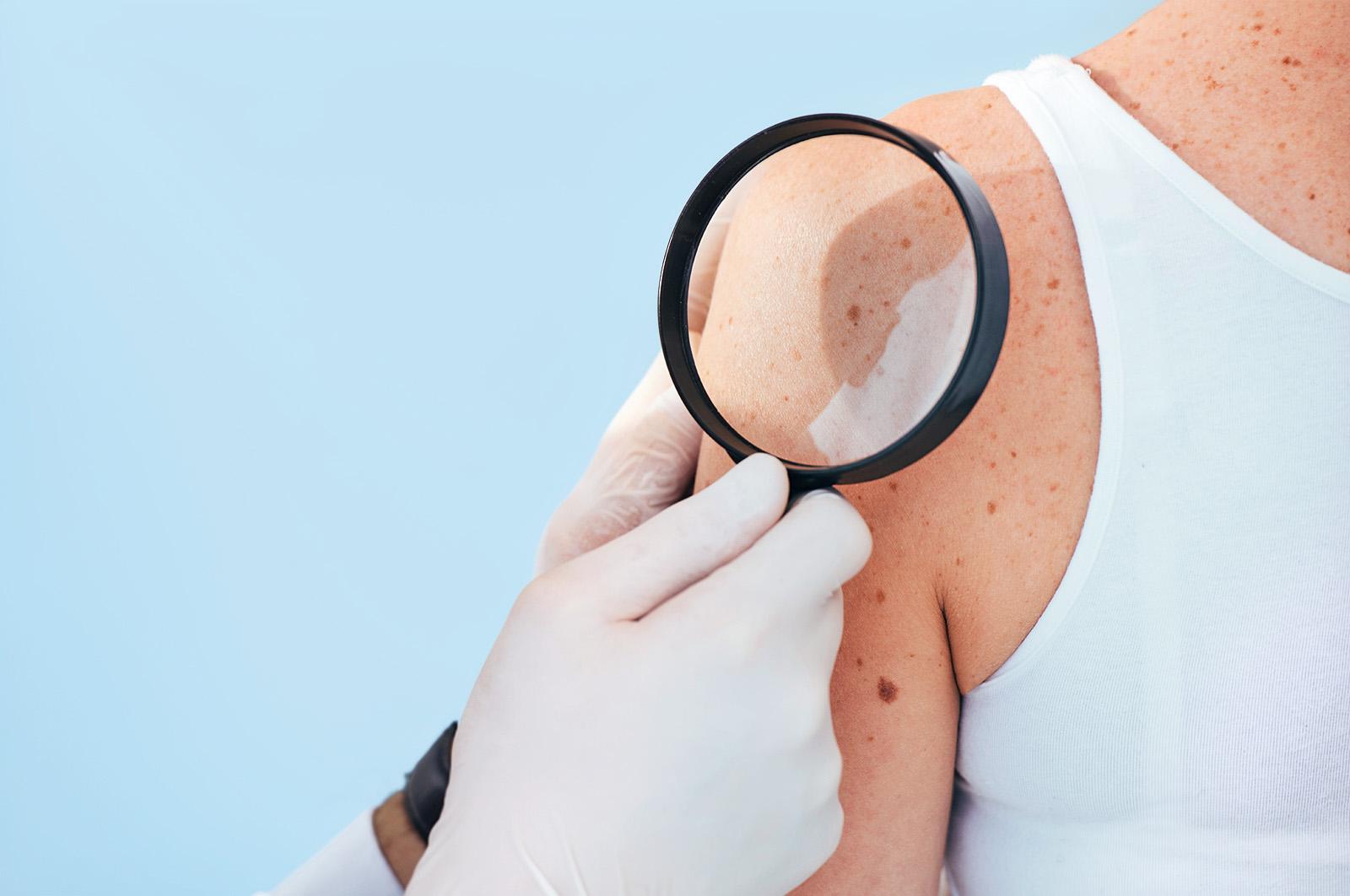
A healthcare professional may examine the spot using a specialised magnifying device and determine whether further tests, such as a skin biopsy, are necessary. A biopsy involves taking a sample of tissue for examination.
Remember that most unusual skin spots turn out not to be cancer, but getting a concerning change checked is the only way to know for sure.
Can SkinVision help you check a suspicious skin spot?
Yes, If you are unsure about a skin spot, skin cancer app like SkinVision may be a useful supportive tool for reviewing your skin health. SkinVision is a CE-marked medical device (EU MDR Class IIa) that provides a risk indication (low or high) for a skin spot, quality-checked by dermatologists, along with a recommendation to monitor it or see a doctor. You can also store photos to track changes over time. You can explore the app to understand the available assessment process and whether it is suitable for your needs.
However, an app-based assessment is not a medical diagnosis and does not confirm or rule out skin cancer. A reassuring result should not override a concerning change or replace an examination by a qualified healthcare professional.
If you notice a new, changing, or unusual spot, seek medical advice even if you have already used a digital skin assessment tool.
Final thoughts: pay attention to changes in your skin
Knowing what your skin normally looks like can help you recognise possible skin cancer symptoms. During a skin self-examination, look for new or changing moles, unusual growths, persistent scaly patches, and sores that do not heal. Remember the ABCDE signs of melanoma, but do not rely on them alone to identify every type of skin cancer.
If you notice something unusual, arrange a medical assessment instead of waiting for it to change further. A skin self-examination can help you spot a potential problem, but only an appropriate medical evaluation can determine whether a lesion is skin cancer.
Start checking your skin for signs of skin cancer and get an instant risk indication. Get SkinVision.
FAQs
What are the first signs of skin cancer?
The first signs of skin cancer may include a new or changing mole, an unusual skin growth, a persistent scaly patch, or a sore that does not heal. Melanoma may cause changes in a mole’s size, shape, or colour, while basal cell carcinoma and squamous cell carcinoma may appear as bumps, rough patches, or persistent sores. Any new or changing skin lesion that concerns you should be assessed by a healthcare professional.
How can I check for skin cancer at home?
You can check your skin at home by examining your entire body in good lighting, using a full-length mirror and a handheld mirror to see difficult-to-reach areas. Look for new moles, changes in existing spots, unusual growths, and sores that do not heal. The ABCDE method can help you recognise possible melanoma warning signs. However, a self-examination cannot diagnose skin cancer, so seek medical advice if you notice a suspicious change.
What does skin cancer look like in its early stages?
Early skin cancer can look like a new mole, a changing spot, a small pearly bump, a rough patch, or a sore that does not heal. Melanoma may have irregular borders or uneven colouring, while basal cell carcinoma and squamous cell carcinoma can appear as persistent growths or scaly areas. There is no single appearance that identifies every skin cancer, so unusual or changing spots should be medically assessed.
Can skin cancer develop without a mole?
Yes. Skin cancer does not always develop from an existing mole. Although melanoma can develop from an existing mole, most melanomas appear as a new spot on previously normal-looking skin. Basal cell carcinoma and squamous cell carcinoma do not develop from moles at all. They usually appear as a pearly or pink bump, a rough or scaly patch, or a sore that does not heal. Squamous cell carcinoma can sometimes develop from a rough, sun-damaged patch called actinic keratosis. This is why it’s important to pay attention to any new or unusual skin change, not just your existing moles.
Can skin cancer be the same colour as your skin?
Yes. Some skin cancers can appear skin-coloured, pink, reddish, or pearly rather than dark brown or black. This is one reason why checking only for dark moles is not sufficient. Look for changes in the skin’s texture, shape, size, and surface, as well as growths that bleed, crust, or fail to heal.
Can skin cancer be itchy or painful?
Skin cancer can sometimes cause itching, tenderness, or pain, although it may also develop without any discomfort. A spot that becomes persistently itchy, painful, or tender—particularly if it also changes or bleeds—should be assessed by a healthcare professional. The absence of pain does not mean a skin lesion is harmless.
How quickly can skin cancer develop?
The rate at which skin cancer develops varies depending on the type of cancer and the individual lesion. Some skin cancers grow slowly, while others can change more rapidly. There is no reliable timeframe that can determine whether a spot is cancerous. If you notice a suspicious or changing lesion, seek medical advice rather than waiting for it to grow.
Can an app detect skin cancer?
Apps cannot diagnose skin cancer. Some regulated skin cancer apps, such as SkinVision, can provide a risk indication for a skin spot and advise whether to see a doctor. An app result does not confirm or rule out skin cancer, so consult a healthcare professional about any new, changing, or concerning spot, even if the app result is reassuring.
When should I get a mole checked?
Arrange a medical assessment if a mole changes in size, shape, or colour, develops irregular borders, or looks different from your other moles. You should also seek advice about a new or unusual spot, a mole that becomes persistently itchy or painful, or a lesion that bleeds or develops a sore. Do not wait for a mole to display every ABCDE warning sign before getting it checked.